
Date: 19 October 2022
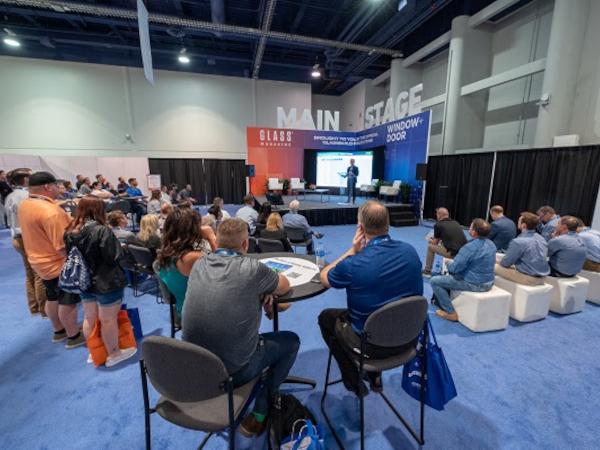
The nonresidential building sector should plan for a strong 2023, according to Connor Lokar, senior forecaster, ITR Economics, who delivered the annual economic forecast keynote presentation at the Glazing Executives Forum at GlassBuild America: The Glass, Window & Door Expo. Lokar also presented an economic update for GlassBuild attendees on Oct. 18 at the GlassBuild Main Stage.
“Commercial folks, you’re finally getting your feet back under you, and that will continue next year,” Lokar told the crowd of nearly 300. All nonresidential segments are in a recovery or growth mode, with institutional, lodging, manufacturing and commercial all moving upward, he said.
The growth for the commercial market will happen despite slowing U.S. and global markets. “The U.S economy is decelerating; the global economy is decelerating. It’s a slowing growth trend,” Lokar said. “The pie is still getting bigger; it’s just not getting bigger at the same rate. The landing gear is out, and the plane is nearing the runway, but we are not crashing into the runway. We do not think that is a probable outcome. It’s a decelerating forecast.”
Because nonresidential building is a trailing sector, commercial glazing contractors likely won’t feel the effects of the slowing economy for 12 to 24 months. “Really, it is 2024 that could have problems for you,” Lokar said.
Residential construction, on the other hand, is already experiencing a slowdown. “Housing was overstimulated. People had abnormally high savings and low mortgage rates. Now, home prices are falling,” Lokar said. “Housing is in recession. … We will likely see a double-digit rate of contraction before it’s all said and done.”
However, Lokar said the downturn will not be a repeat of the Great Recession housing crash. “This is not going to be 2012. But it is going to be a buyers’ opportunity,” he said.

LABOR, INFLATION AND SUPPLY CHAIN
In the United States, the slowdown in growth will likely help to ease the primary challenges companies have been facing in 2022. “Labor, inflation, supply chains, all of those will be better by next year,” Lokar said.
The high demand of 2021 and 2022 has made it difficult for suppliers “to make any headway” in addressing supply. However, now they are “adding capacity, adding people. … Companies can’t use COVID to make excuses anymore. Things are going to stabilize and get better.”
Inflation rates will also get better in the coming year. ITR forecasts project falling inflation rates through 2023 to a rate of about 3 percent by 2024.
 600450


Add new comment