

Date: 29 February 2024
Recycling is very high on the agenda of Europe’s flat glass manufacturers, and they are calling on policymakers to follow suit. The new video of Glass for Europe’s 2024-2029 manifesto introduces the conditions to create a closed-loop recycling system that can contribute to saving raw materials and reduce carbon emissions in glass production.
Flat glass manufacturers are eager to use more recycled glass in their manufacturing process, but the barriers to overcome remain numerous. In the last video of our 2024-2029 Manifesto, Joana Arreguy (Saint-Gobain), Christian Quenett (NSG) and Iva Ganev (Glass for Europe) present policy measures that could be undertaken at the European level to ensure that old and broken flat glass can effectively return to manufacturers’ furnaces, further supporting the efforts undertaken for many years by companies. Despite the difficulties, increasing recycling is a powerful tool to limit the use of raw materials, reduce the sector’s CO₂ emissions. However, it will only be possible to take things to the next level if there is an enabling policy framework in place.
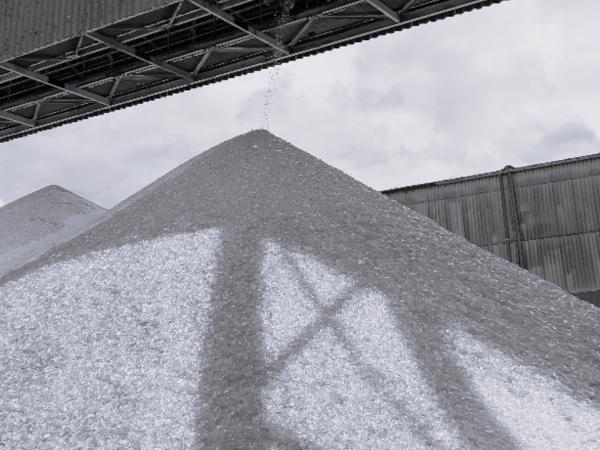
It is estimated that more than 1.5 million tonnes of waste glass (old windows, facades, internal partitions) are generated in the EU each year. Unfortunately, due to a lack of proper sorting during the renovation and demolition phases, flat glass is too often mixed with other materials, drastically hampering its recyclability. Specific recycling targets for individual construction materials would help ensuring that glass is properly dismantled, sorted and collected. In parallel, the EU must set harmonized by-product criteria to facilitate the transport of waste glass to the furnaces.
If the volumes of flat glass to be recycled appear little in comparison to other construction materials, policymakers have the opportunity with limited support measures to boost circularity in a key construction material and help the flat glass industry reduce its CO2 emissions.
This video is the last one in a five-part series that constitutes Glass for Europe’s manifesto, titled ‘A Mandate to Focus on Enabling Sustainable Transformation.’ They serve as a basis for discussions with European officials and civil society, aiming to shape European policies over the next five years. All the videos from the Manifesto are available here.
 600450



Add new comment